Home › Stories › Placard
Placard · Hardware

Xerox Alto: A Desktop Computer Before Its Time

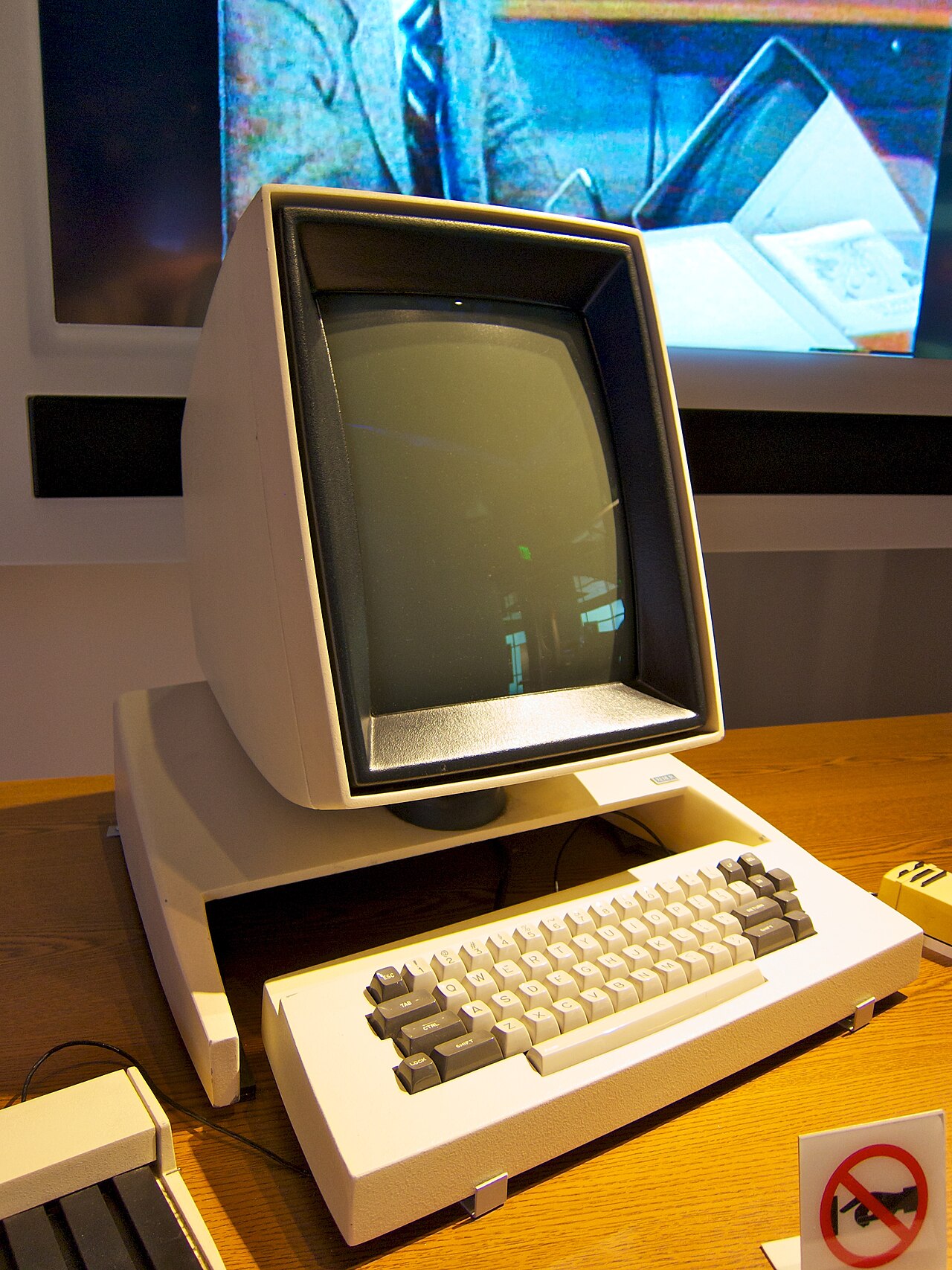
A placard for the 1973 Xerox Alto, the research workstation with a mouse, a bitmapped screen and a network connection.

Xerox Alto workstation with tall portrait display, keyboard and mousePhoto: Don DeBold. CC BY 2.0. Source.

Researchers at Xerox PARC in Palo Alto, California, built the Alto in 1973 to explore what a personal computer could be. Each machine had a tall bitmapped screen, a keyboard, a three-button mouse and a removable disk cartridge. Ethernet cables joined the Altos to one another and to shared printers.

Programmers wrote text editors, drawing programs and the Smalltalk language for it. Documents on the screen looked like the pages that came out of the printer. About 2,000 were built, most for use inside Xerox and in universities. Xerox never sold the Alto as a product, but the ideas it tested helped shape the Apple Macintosh and later desktop computers. A single Alto cost many thousands of dollars to build, so the lab shared its machines rather than selling them to the public.

Maker: Xerox PARC

Year: 1973

Display: Bitmapped, portrait orientation

Input: Keyboard and mouse

References

  1. Thacker, Charles P., et al. "Alto: A Personal Computer." Xerox PARC Technical Report CSL-79-11, 1979.
  2. Hiltzik, Michael. Dealers of Lightning. HarperBusiness, 1999.
  3. Computer History Museum. "Xerox Alto" collection records.
In the catalog

1973
Minicomputers & Workstations

Xerox Alto

An experimental personal workstation with a bitmapped display, mouse and Ethernet that defined the look of later personal computers.

1973 · Xerox Palo Alto Research Center

Keep reading

Placard · Hardware

Commodore 64: The Computer in Millions of Homes

A placard for the Commodore 64, the 1982 home computer that put color graphics and synthesized sound in living rooms.

1 min read
Audio Script · Hardware

The Black Cube: A Guided Tour of the Thinking Machines CM-1

A 14-minute audio script about the Connection Machine CM-1, a 1980s computer with 65,536 simple processors in a black cube of red lights.

8 min read
Deep Dive · Hardware

The AN/FSQ-7: The Giant Computer Behind Cold War Air Defense

How the SAGE air defense system and its AN/FSQ-7 computers introduced real-time computing, light guns, core memory and long-distance data links in the 1950s.

11 min read