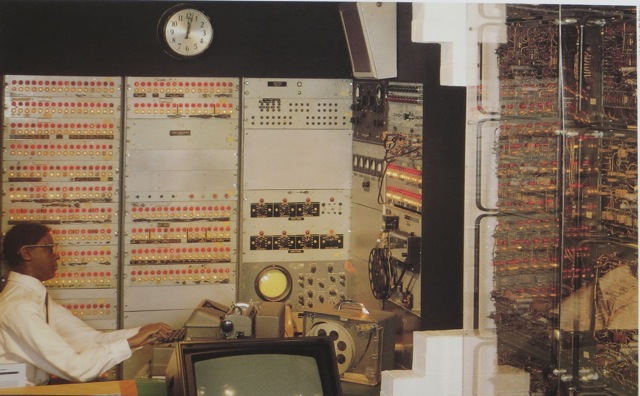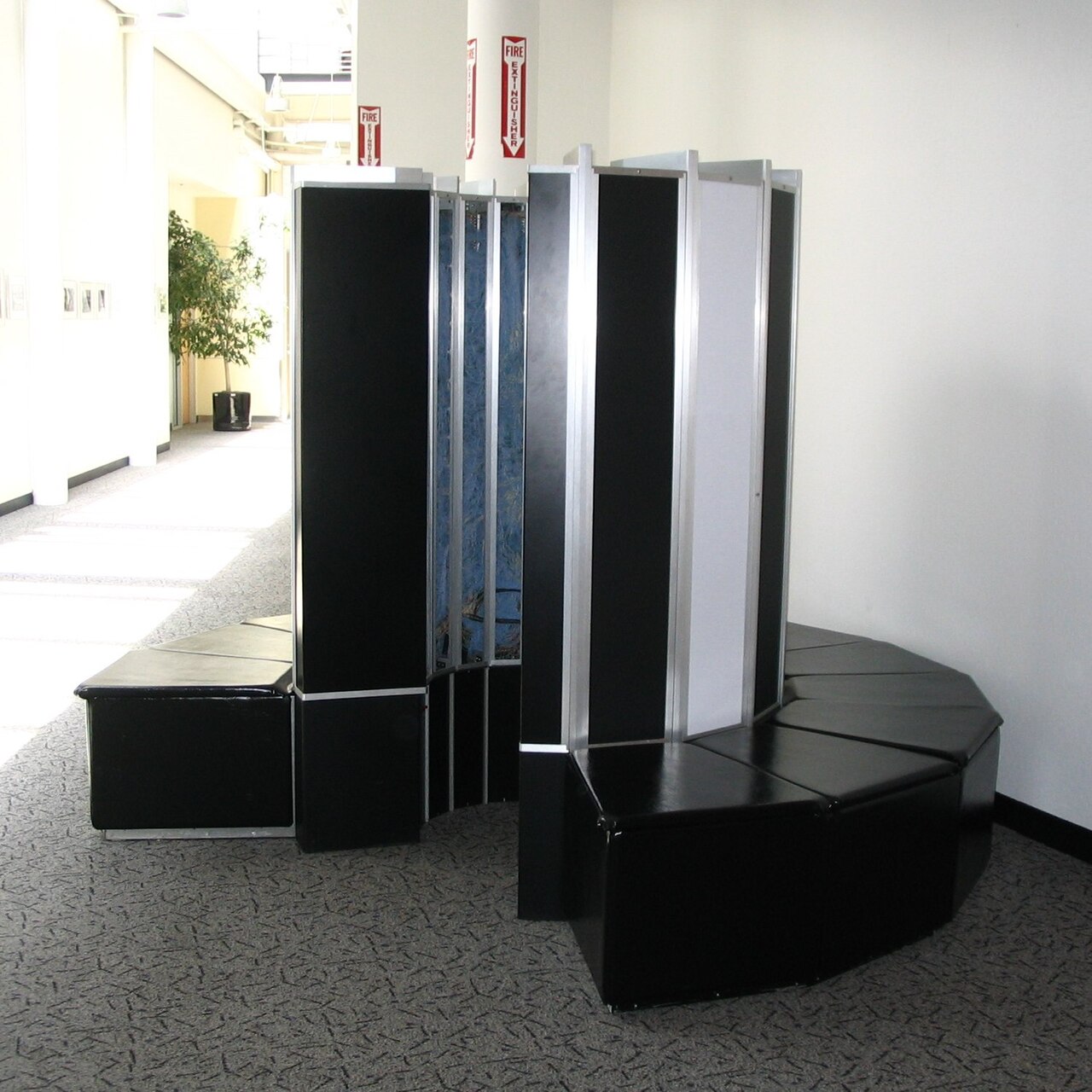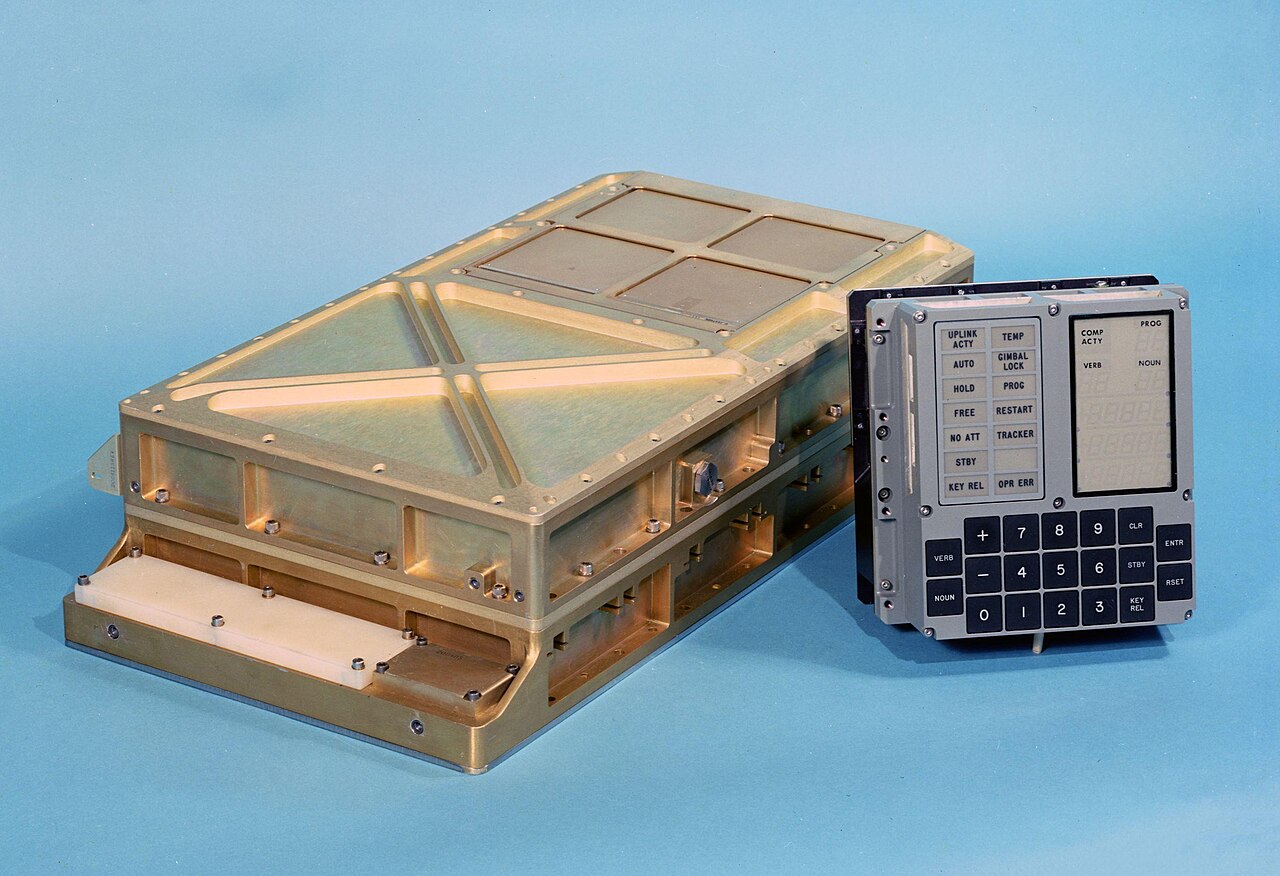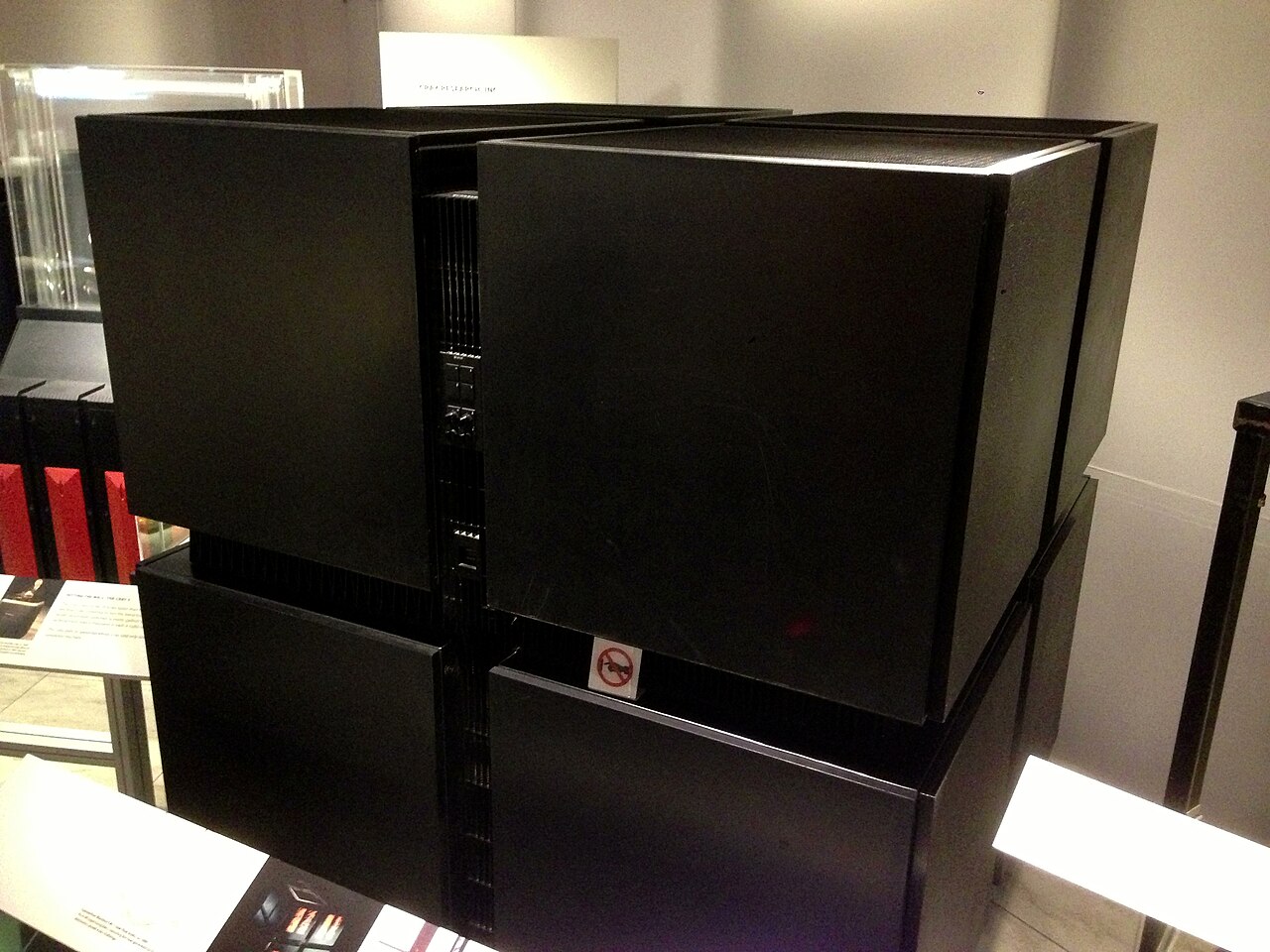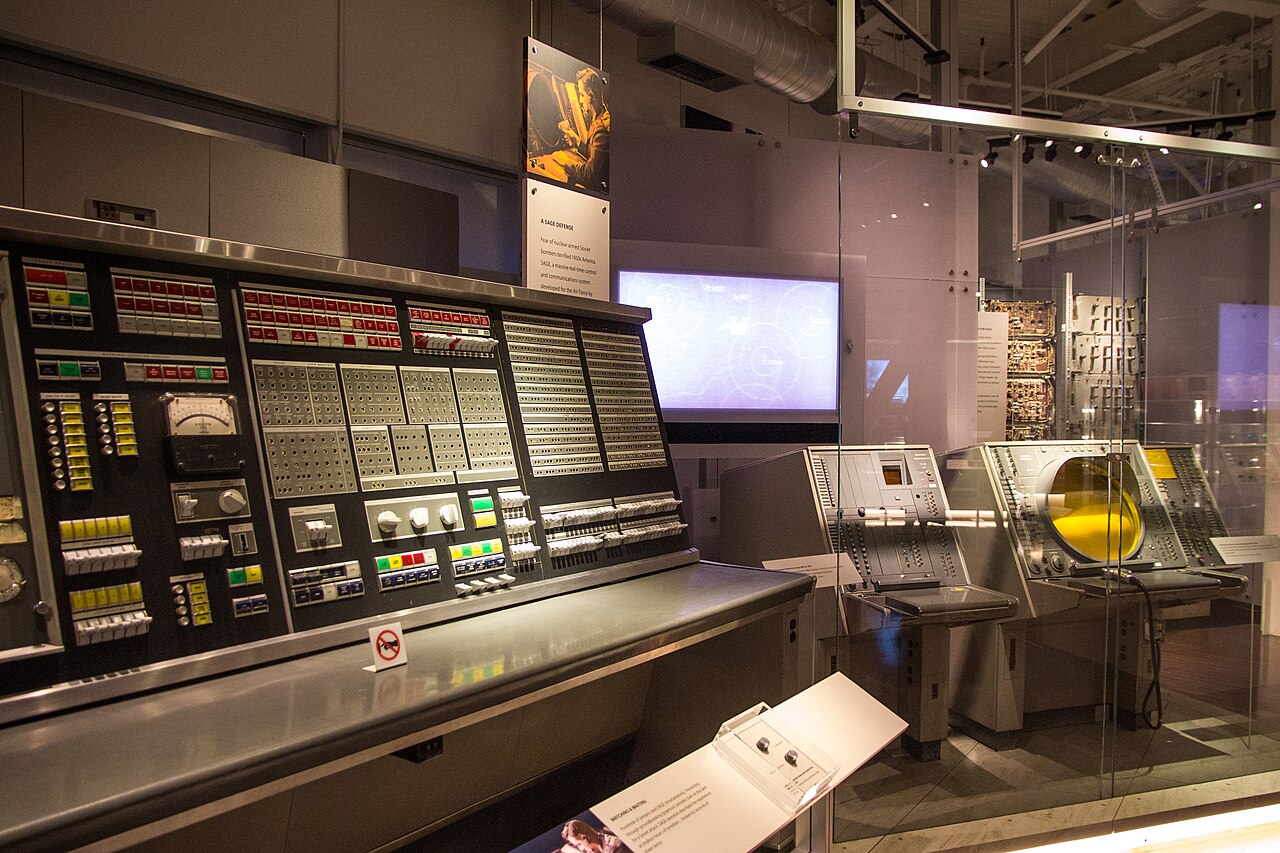
The AN/FSQ-7 was one of the largest computers ever built, and it was made to watch the sky. The United States Air Force used it in the 1950s and 1960s to turn radar signals into a live map of air traffic and to guide interceptor aircraft toward bombers. To do that, engineers invented ideas that we now take for granted: computers that answer at once, screens you can point at, and data that travels over telephone lines. This story explains the problem, the machine and the legacy.
The problem: a threat that moved faster than people
In August 1949 the Soviet Union tested an atomic bomb. By the early 1950s it also had long-range bombers, including the Tu-4 and later the Tu-95, that could in principle cross the Arctic and reach American cities. The United States had a network of radar stations, but people ran it by hand. Operators at each station spoke to a central room by telephone. Plotters there moved markers on a large table to show where aircraft were.
That method was slow. A bomber that flew several hundred miles an hour could move a long way while a report passed through three or four sets of hands. Planners worried that a large raid would overwhelm the human plotters. They wanted a machine that could take in radar data from many sites, combine it into one picture and suggest which fighter should go where.
Whirlwind: the computer that had to be fast
The answer began with a project that had nothing to do with bombers. In the late 1940s, Jay Forrester led a group at the Massachusetts Institute of Technology (MIT) that was building a computer called Whirlwind. The Navy had asked for a flight simulator, a machine that could react to a pilot's controls as they moved. That requirement mattered. Most computers of the time, such as ENIAC, worked in batches. A person submitted a job, waited and collected the result later. A flight simulator could not wait. It had to answer at once, in what engineers call real time.
Whirlwind grew into a general-purpose computer, and it was among the first to work in real time. It showed that a computer could track moving objects and update a display many times a second. The Air Force saw the connection to air defense. If a computer could follow a simulated airplane, it could follow real ones that radar reported.
One flaw held Whirlwind back. Its memory used special tubes that stored data as electric charge on a screen. These tubes were slow and failed often. A system that guarded a continent could not depend on them.
Magnetic cores
Forrester and his colleagues found a better way. They strung tiny rings of magnetic material, called cores, on a grid of wires. An electric pulse could set a core to point one way or the other, which stood for a zero or a one. The ring kept its setting without power, and the machine could read it quickly.
Magnetic-core memory ran on Whirlwind in 1953 and proved far more reliable than the tubes it replaced. It became the standard memory for computers for about twenty years. Without it, a machine like the AN/FSQ-7 could not have run for months without a failure.
IBM builds the machine
The Air Force asked MIT's Lincoln Laboratory to design the overall system and chose IBM to build the computers. IBM based the design on Whirlwind. The result was the AN/FSQ-7, a name that comes from the military's equipment code system. It is also known as the Combat Direction Central.
The machine used about 49,000 vacuum tubes. It weighed about 250 tons and drew roughly 3 megawatts of power, about as much as a small town. It processed about 75,000 instructions each second. By modern standards that is tiny. In the 1950s it was fast enough to follow hundreds of aircraft at once.
The project was enormous for IBM. By one common account, it employed about 7,000 people at its peak, which was roughly a fifth of the company. The experience taught IBM how to build large, reliable computers and trained engineers who later worked on the company's commercial machines. Many historians rate it as a turning point in IBM's path from punched-card equipment to computers.
Two computers for one job
An air defense center could not afford a failure. A broken computer during a real alert would leave a region blind. IBM therefore used a duplex design. Each direction center had two identical computers. One ran the job, and the other stood by with the same data. If the active computer failed, the standby took over within moments.
This was an early and important case of what engineers now call high availability. Modern data centers, banks and airlines use the same idea with servers. Doubling the hardware is costly, but it is how a system keeps running when parts break.
Tubes failed often, so technicians used marginal checking. They slightly lowered or raised the voltages and ran test programs. Weak tubes failed under that stress, and crews replaced them before they could fail during real operation. The practice kept the failure rate low enough for the system to meet its goals.
The direction centers
The Air Force built 23 direction centers across the United States and Canada. Each was a huge, windowless, concrete building about four stories tall. A center contained the pair of computers, power equipment, cooling plants and the large rooms where operators worked. The cooling system was a major project in its own right, because the tubes gave off so much heat.
The first center began operating in 1958 at McGuire Air Force Base in New Jersey. The network was complete in the early 1960s. Radar stations sent their data to the nearest center over telephone lines, and the centers shared information with each other. A staff of hundreds worked in each building around the clock.
Data over telephone lines
Radar stations could be hundreds of miles from a direction center. SAGE needed a way to send digital data over ordinary telephone lines. Bell Telephone Laboratories developed equipment for this job. Devices called modems turned the computer's ones and zeros into tones that a phone line could carry, and turned them back into data at the other end.
This made SAGE one of the first large networks of computers and communication links. The technology was a direct ancestor of the modems that later connected home computers to online services. It also showed that a wide-area network could carry data reliably enough for a critical job.
The interface: screens and light guns
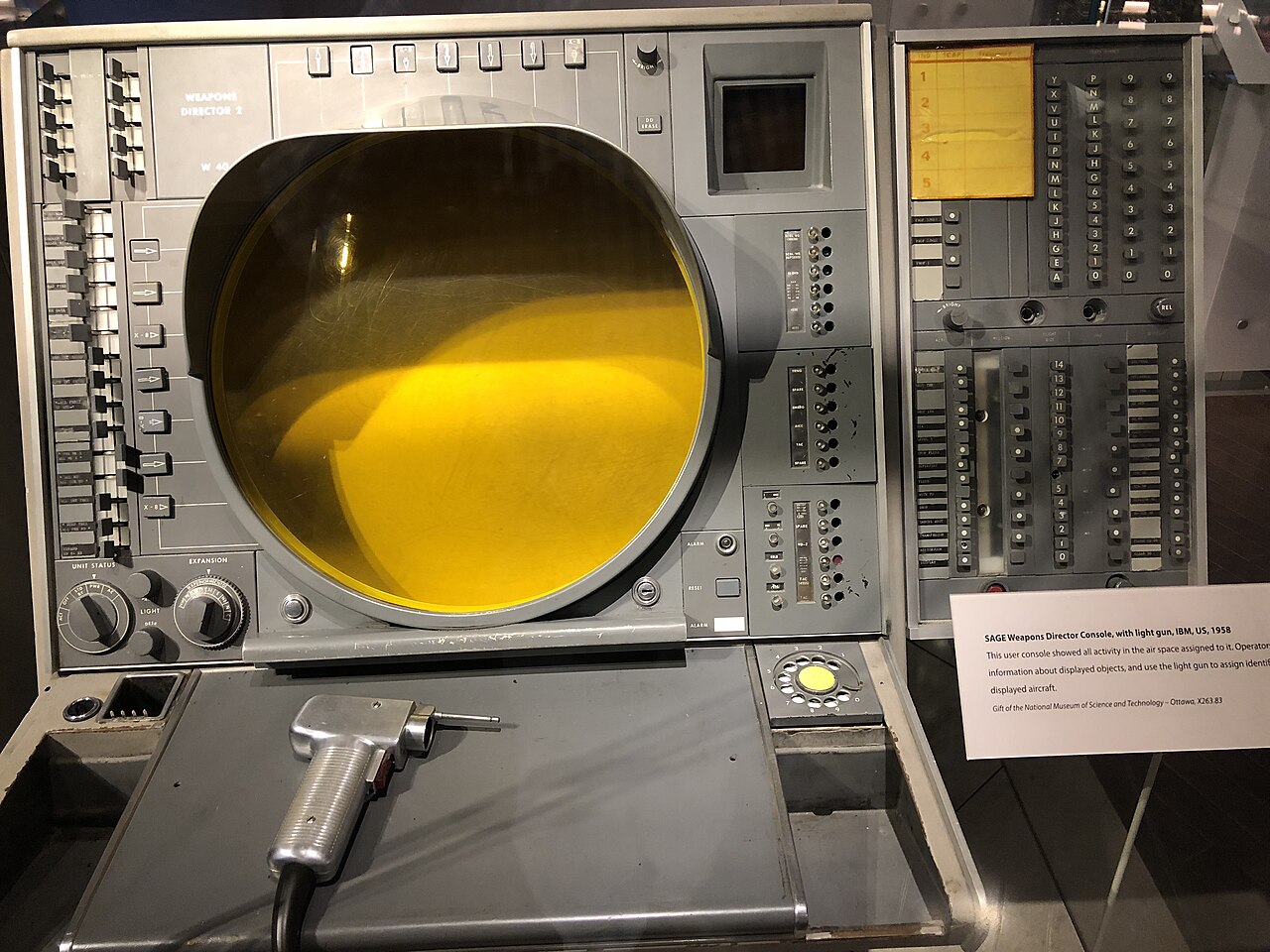
The most forward-looking part of SAGE was how operators used it. In a direction room, rows of people sat at consoles with round display screens. The screen showed a map of the sky with symbols for aircraft. Different symbols marked friendly flights, unknown aircraft and tracks the computer was following.
An operator selected an aircraft with a light gun. This was a pen-shaped device with a light sensor at its tip. The operator pointed it at a symbol on the screen and pressed a trigger. The sensor noticed when the screen drew that spot, and the computer knew which aircraft the operator meant. It then showed the aircraft's course, speed and height, and the operator could assign a fighter to intercept it.
That sequence is the ancestor of pointing at something on a screen and clicking. The light gun led to the light pen, which researchers used in the early 1960s for computer graphics, and the idea of pointing devices carried forward to the mouse and the touchscreen. SAGE was one of the first systems in which many people used a computer interactively, as part of their daily work.
Software at a new scale
The programs for SAGE were also unusually large. The finished software ran to hundreds of thousands of instructions, written in assembly language by large teams. Few organizations in the 1950s had ever managed a program of that size. Managers had to invent ways to divide the work, test the pieces and keep versions straight.
The RAND Corporation trained many of the first programmers for the job. In 1957 its programming group became a separate organization, the System Development Corporation (SDC). SDC trained and employed a large share of the early American programming workforce. Several of its staff later started other software companies.
A programming language called JOVIAL came out of SDC. It was named for Jules Schwartz, who led its development, and it grew out of the ALGOL family of languages. Engineers used JOVIAL for later command-and-control software, and it stayed in military use for decades. It is a descendant of the SAGE era, though the original SAGE programs used assembly language, not JOVIAL.
A shift in the operator's day
The work in a direction room was shaped by the machine. Radar technicians fed tracks into the system. Identification staff checked each new track against flight plans and decided whether it was friendly or unknown. Weapons directors then guided interceptors toward targets. Each person handled one step, and the computer joined the steps into one flow of information.
This division of labor was new. Before SAGE, a single plotting team handled most steps by hand. In a direction room, the computer did the arithmetic and bookkeeping, and the people made the decisions. Designers called this a human-machine system, and they studied operators closely to learn which tasks suited each. Researchers in psychology and human factors gained much of their early data from SAGE rooms.
Training mattered as much as hardware. Crews rehearsed with simulated raids that the computer generated, so operators could practice without real aircraft. Exercises used recorded or artificial tracks, and the system could grade how quickly a crew reacted. This use of a computer as a trainer echoed Whirlwind's origin as a flight simulator.
Reliability by habit
Keeping 49,000 tubes working was a daily job. Crews scheduled time on each computer for tests and repairs, while the standby unit carried the load. Technicians kept logs of every failure and looked for patterns. A tube type that failed too often was replaced across the whole machine.
The routine worked. Reports from the period describe availability far above that of other computers of the time, with the pair of machines almost always providing at least one working unit. That record set a standard for later large systems, and it showed managers that a computer could be trusted with a critical job when people planned for failure.
Did it work?
The answer is mixed. SAGE worked as an engineering achievement. It tracked aircraft, guided practice intercepts and ran for years. But the threat changed before the system was fully in place. In 1957 the Soviet Union launched Sputnik and soon after showed it could build long-range ballistic missiles. Missiles travel too fast for an air defense system built to guide fighters, so SAGE could not defend against the new danger.
Critics have also pointed out that no system could have stopped a determined bomber attack with certainty, and the system's cost was very high. Defenders reply that it gave commanders a clear view of the sky and a way to respond quickly, and that it deterred attack by showing the nation could see it coming. Historians still debate how much it added to security. Both views are reasonable, and the story here does not settle the argument.
The Air Force kept the direction centers in service through the 1960s and 1970s, with upgrades. The last SAGE centers closed in the early 1980s, after newer systems took over the job.
SABRE and the civilian echo
The skills IBM gained from SAGE carried into business. In the late 1950s American Airlines was struggling with paper reservations. Its staff looked for a way to track seats across the country in real time. IBM and the airline built SABRE, which began operating in the early 1960s. It linked terminals in ticket offices to a central computer over telephone lines.
The parallels are plain. Both systems answered users at once, stored a shared picture of the world and served many people at the same time. IBM engineers who had worked on SAGE helped design the reservation system. SABRE became one of the first commercial real-time systems, and versions of it still operate in the travel industry.
From Cold War machine to movie prop
After the military retired the machines, the blinking lights and large panels became a familiar look. Parts of the equipment appeared in television and film as stand-ins for futuristic computers. The series The Time Tunnel is one often-cited example. For many viewers in the 1960s and 1970s, those panels were what a giant electronic brain looked like.
Museums now preserve pieces of SAGE equipment, including consoles and cabinets. The Computer History Museum in California has a section of an AN/FSQ-7, and its display shows the scale of the original. Other collections hold light guns, tubes and memory units. Anyone planning an exhibit should check with the lending museum for what it currently has available.
Reading the numbers
Three figures in this story deserve a closer look. The first is 49,000 tubes. Published sources give a range, so treat it as a round figure for one computer. The second is 250 tons. That weight covers the computer cabinets of one machine and varies between sources by about ten percent. The third is 75,000 instructions a second. A modern phone performs billions of instructions each second, so one phone does the work of tens of thousands of AN/FSQ-7 machines. In 1958, though, no other system tracked so many moving objects so quickly.
Power draw of about 3 megawatts is also an estimate. At typical household use of roughly 1.2 kilowatts, 3 megawatts would run about 2,500 homes. That is where the comparison to a small town comes from.
Why it matters
SAGE gathered, in one project, many ideas that later defined computing. It showed that computers could answer in real time. It showed that screens and pointing devices could make a machine usable by ordinary operators. It joined computers by communication lines. And it forced the industry to learn how to build very large, very reliable software.
The project also carries a lesson about cost and timing. Engineers solved the problem they were given, but the world changed while they worked. That lesson applies to technology projects today: a well-built system can still be overtaken by events.
Questions for visitors
- Why did the engineers use two computers for one job? What is the trade-off?
- What does the light gun have in common with a mouse or a touchscreen?
- Which parts of SAGE appear in services you use today?
- How should a country weigh the cost of a defense system against what it can actually protect?
Selected Bibliography
- Redmond, Kent C., and Thomas M. Smith. From Whirlwind to MITRE: The R&D Story of the SAGE Air Defense Computer. MIT Press, 2000.
- Astrahan, M. M., et al. "Logical Design of the Digital Computer for the SAGE System." IBM Journal of Research and Development 1, no. 1 (1957).
- Hughes, Thomas P. Rescuing Prometheus. Pantheon Books, 1998.
- Waldrop, M. Mitchell. The Dream Machine: J. C. R. Licklider and the Revolution That Made Computing Personal. Viking, 2001.