Seymour Cray designed computers that were, for much of two decades, the fastest in the world. He did it with small teams, in laboratories far from the centers of the computer industry, and he often did it by simplifying a design when other engineers were making theirs more complex. The word "supercomputer" is closely tied to his name.
A boy from Chippewa Falls
Cray was born in 1925 in Chippewa Falls, Wisconsin, a small town in the northwest of the state. His father was a civil engineer. Cray showed an early interest in electronics and built equipment as a teenager. After high school he served in the United States Army during the Second World War, where he worked with radio equipment and took part in the European campaign. He later served in the Pacific.
After the war he studied at the University of Minnesota. He earned a bachelor's degree in electrical engineering in 1950 and a master's degree in applied mathematics in 1951. The combination was useful. He could think about circuits as a hardware engineer and about algorithms as a mathematician.
Engineering Research Associates
In 1951 Cray took a job at Engineering Research Associates in St. Paul, Minnesota. The company had been founded by a group of Navy codebreaking engineers after the war and built specialized computers for government customers. It was an early center of computer design in the United States. Cray worked on the ERA 1103, a scientific computer, and soon showed a talent for hard design problems.
ERA was bought by Remington Rand and became part of Sperry Rand's computer business. Many of the engineers did not like the larger company's culture. A group of them, led by William Norris, left in 1957 to found a new firm, Control Data Corporation. Cray joined them.
The CDC 1604
The first computer Cray designed for Control Data was the 1604, introduced in 1960. It used transistors in place of vacuum tubes, which made it faster, smaller and more reliable than the tube machines that came before it. It was a 48-bit scientific computer, and universities, laboratories and government agencies bought it for numerical work.
The 1604 helped to establish Control Data as a serious company. Control Data was small, and it needed a hit to survive. The 1604 gave the firm both income and a reputation for fast machines. It also showed a pattern that would repeat. Cray designed the entire machine with a few colleagues, kept the architecture clean and chose parts for speed.
A laboratory at home
As Control Data grew, Cray grew uneasy about life in a large organization. He wanted to work with a small team in a quiet place. In the early 1960s he persuaded the company to build a laboratory in Chippewa Falls, near his home, away from the headquarters in Minneapolis. The laboratory was close to the woods and the river where he liked to spend time.
The arrangement was unusual, and it shaped the story of the supercomputer. Cray worked with a handful of engineers who came to know the design thoroughly. Decisions were made quickly. Cray had a reputation for needing little management and for disliking meetings. People who knew him described him as quiet and intense, and often as courteous.
The CDC 6600
The machine that made Cray famous was the CDC 6600, introduced in 1964. It was many times faster than the best machines available. Its peak speed was about three million floating-point operations per second, or three megaflops, though the exact figure depended on the program. It is often called the first supercomputer.
The 6600 was fast for several reasons. A central processor focused on arithmetic. Ten small peripheral processors handled input and output, which freed the central processor from slow tasks. The central processor itself had several functional units, which could work at the same time. The control logic kept track of which units were busy and which instructions depended on others, so that work was scheduled automatically. The instruction set was kept simple. Engineers later called this style reduced instruction set design, and it became widely used.
The packaging was compact so that signals traveled short distances. Heat was a problem for such dense circuits, so the machine used refrigerant cooling through plates in the cabinet walls. The cabinet had an unusual cross shape, which let the circuit boards sit close to the center.
The janitor memo
The 6600 attracted attention at International Business Machines, the leader of the computer industry. IBM had announced an ambitious machine of its own and found that the smaller company had delivered a faster one. In August 1963 IBM's chief executive, Thomas J. Watson Jr., sent a memo to his staff. He asked how a laboratory with a small number of people, including the janitor, had beaten IBM's much larger effort.
Cray is said to have remarked that Watson had answered his own question. The story is repeated often, and it captures something real about Cray's method. A small team with clear authority could do what a large organization with many layers could not.
Building for speed
Cray followed the 6600 with the CDC 7600 in 1969, a faster machine that used a pipelined design. He then began work on a successor, the CDC 8600. The project ran into trouble. The design was complicated, and Control Data was pressed to put resources into other products. In 1972, Cray decided to leave and start his own company.
Control Data's leadership supported him, and invested in the new firm. Cray Research was established in 1972, with its laboratory in Chippewa Falls. Cray was a founder, but he wanted to concentrate on engineering, and others handled the business.
The Cray-1
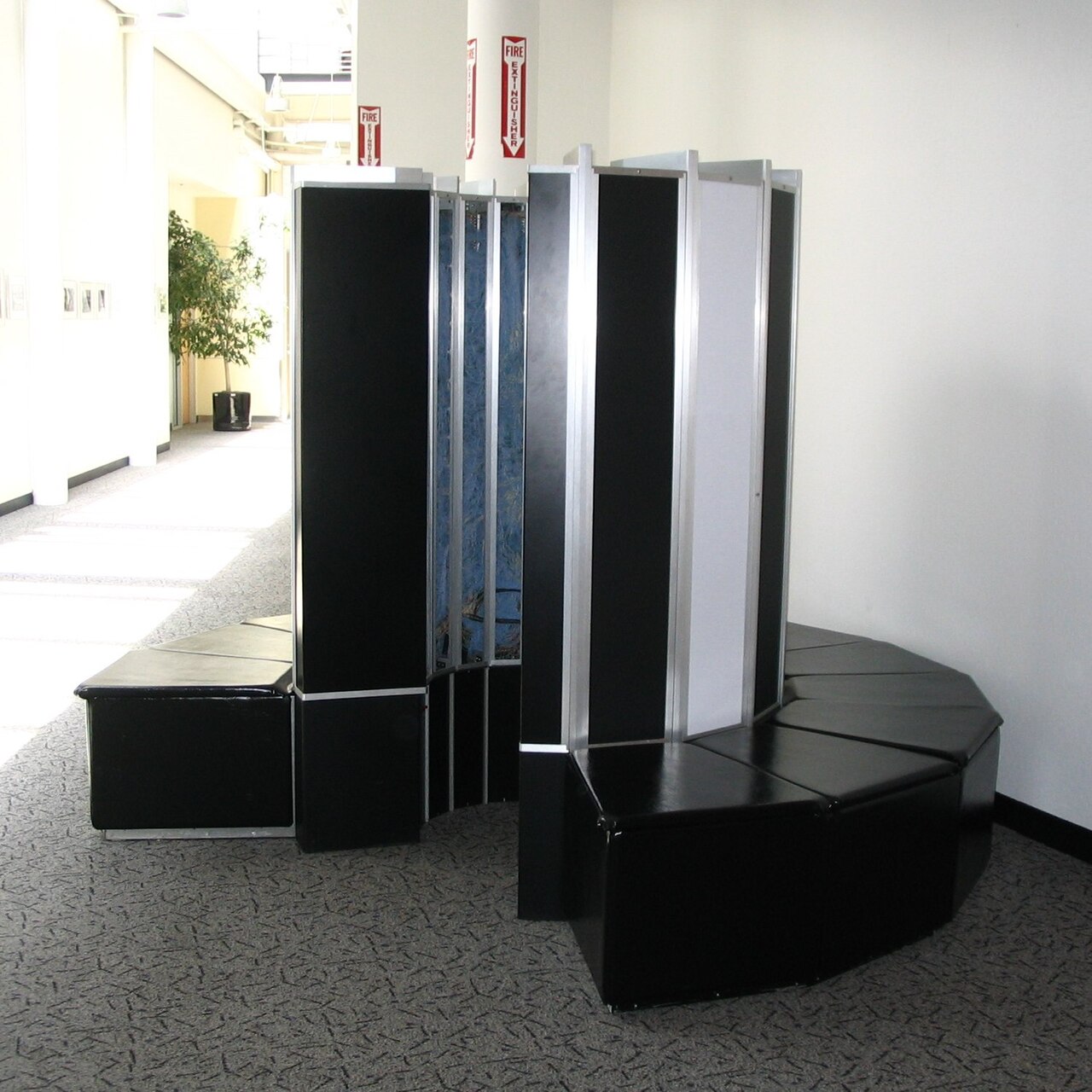
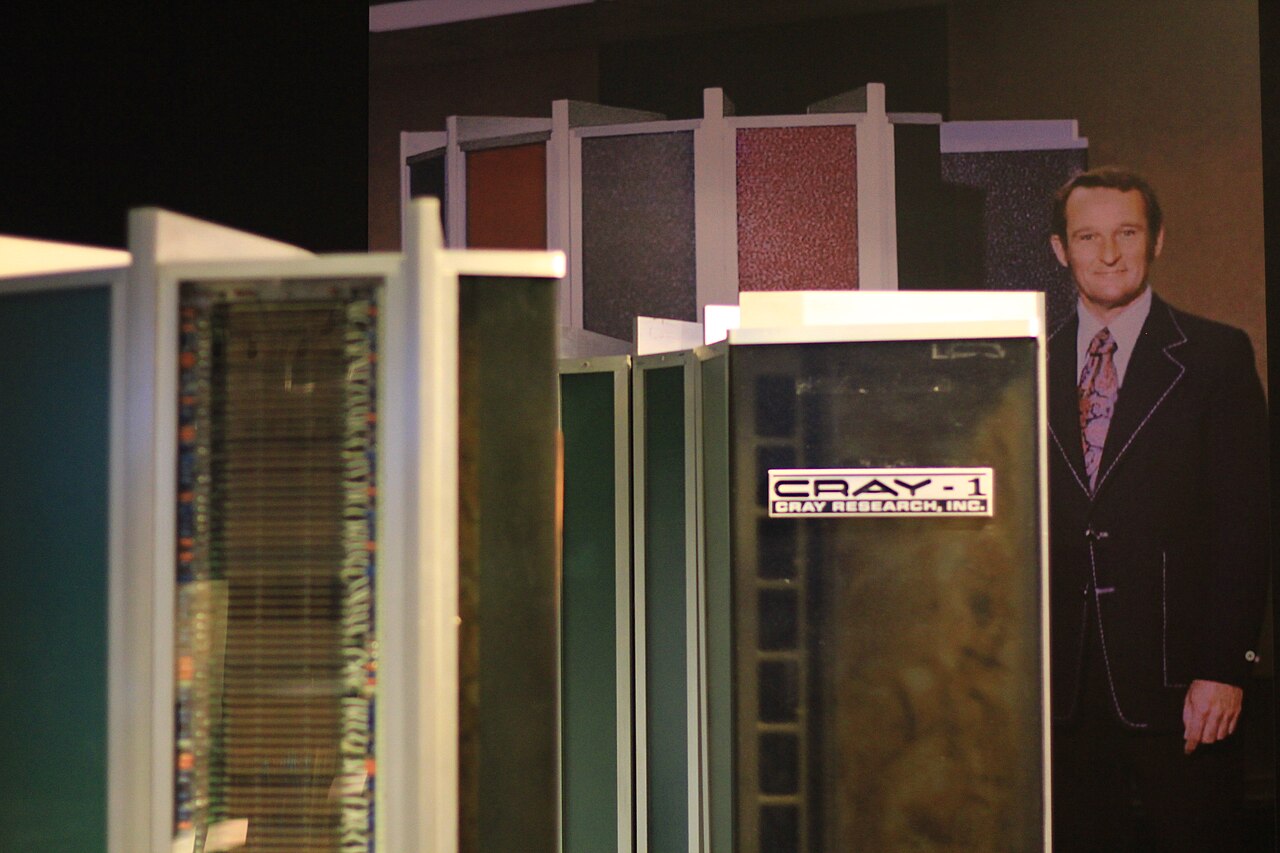
The company's first machine, the Cray-1, was announced in 1975, and the first one went to Los Alamos National Laboratory in 1976. It looked unlike any computer before it. The cabinet was a tall cylinder, made of vertical columns arranged in a three-quarter circle, with a padded bench around the base. The bench hid the power supplies and the cooling equipment.
The shape had a technical purpose. Signals travel at a finite speed, and at the rate of the Cray-1's clock, the length of a wire mattered. A curved layout kept the wires short, especially the longest connections. The designers cut the length of the wires to a few feet at most.
The Cray-1 used vector processing. A single instruction could operate on a whole series of numbers, such as the rows in a table, instead of one number at a time. Vector computers did not start with Cray, since earlier machines had tried the idea. The Cray-1 combined it with a fast clock, fast memory and a well-matched design. Its clock ran at 80 megahertz, with a cycle of 12.5 nanoseconds, and its peak speed was about 160 million floating-point operations per second. Typical programs reached a fraction of that, but a well-written program could come close.
The cooling system used Freon. Refrigerant circulated through aluminum bars between the circuit boards and carried heat away to a cooling plant. The machine weighed about five and a half tons and needed a large power supply. Customers needed a purpose-built room to hold it.
The Cray-1 sold well for a machine of its price, which was several million dollars. Customers were national laboratories, weather services, aerospace firms and universities. Researchers used it for weather prediction, nuclear physics, fluid dynamics and many other problems. Cray Research became a successful public company.
Working with the Cray-1 in the field
A supercomputer needed more than a clever design. Each customer needed people to install it, keep it cooled and write programs that took advantage of the vector hardware. Cray Research sent its own engineers to sites to support the machines. Programmers learned to arrange their loops so that the vector unit stayed busy, and compilers that could do this automatically became a selling point.
The Cray-2 and the bubbles
Cray had lived by one rule: keep things small so that signals travel fast. As the circuits grew faster, they also grew hotter. For his next major design, the Cray-2, he took an unusual approach to cooling. The circuit boards were stacked tightly and submerged in a liquid. The liquid was Fluorinert, a fluid that does not conduct electricity and does not harm electronics. It carried heat away from the chips, and the heat was removed by a water-cooled system.
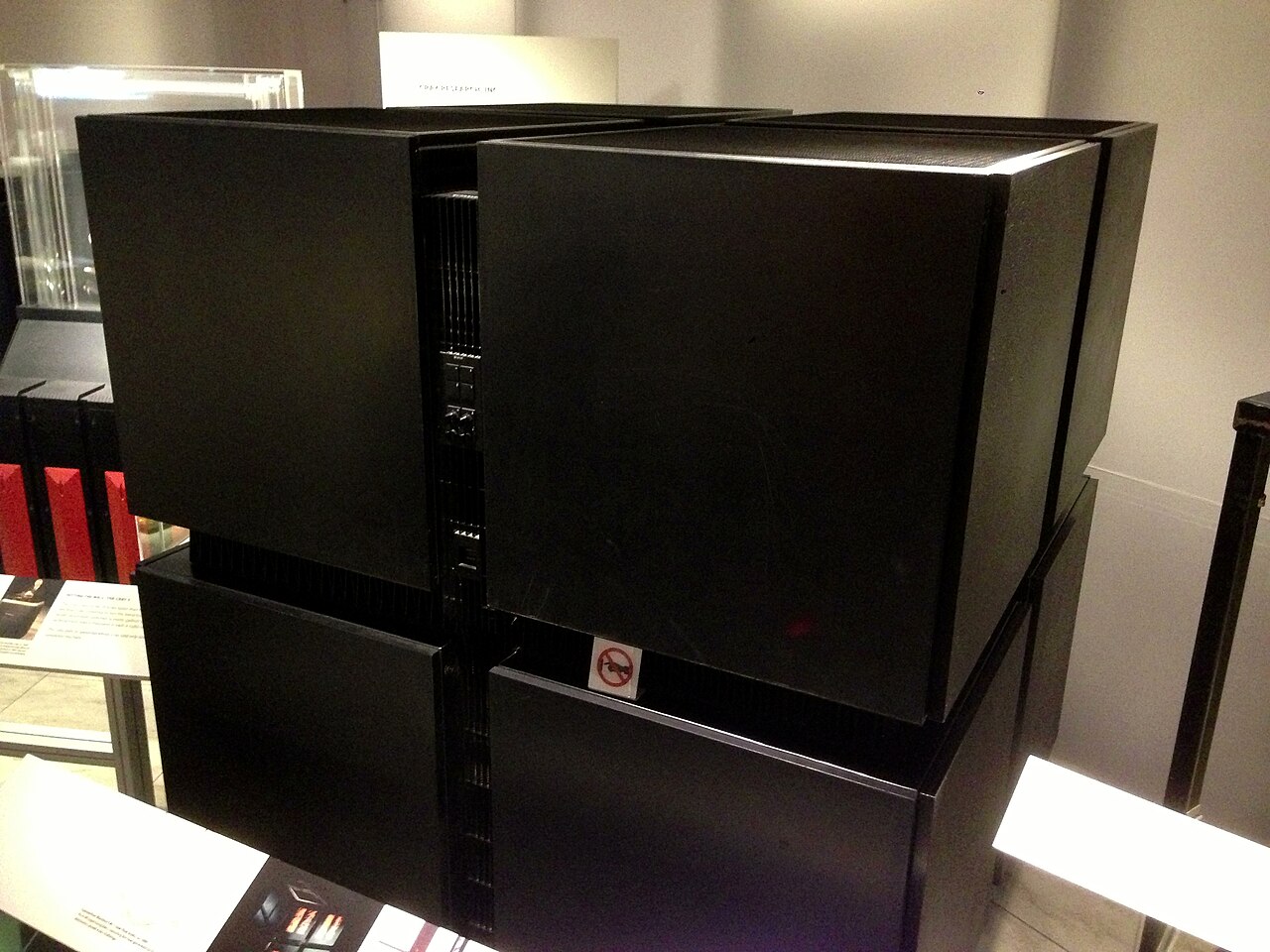
The Cray-2 appeared in 1985. Its clock cycle was 4.1 nanoseconds, and its peak speed was nearly two billion operations per second, about two gigaflops. Visitors could see the machine's bubbling coolant through a transparent panel, which made it one of the most photogenic computers ever built. The machine's compact C-shaped tank is often shown in museums and photos.
A change of direction
In the 1980s the market began to change. Parallel computers, which used many processors, started to challenge the single, very fast processor. Cray was skeptical at first. He is said to have asked whether anyone would prefer to plow a field with 1,024 chickens instead of two strong oxen. The remark is a popular piece of computing lore, and its exact origin is uncertain. In time, parallel designs did take over, and Cray's own company built them.
Cray left Cray Research in 1989 to found a new firm, Cray Computer Corporation, in Colorado Springs, Colorado. He wanted to build a machine with chips made of gallium arsenide, a material faster than silicon. The Cray-3 was technically ambitious and difficult to make. The company struggled to find customers, the defense budget shrank after the end of the Cold War, and the firm went bankrupt in 1995.
Cray founded another company, SRC Computers, in 1996, to build systems using a different design. In September of that year he was hurt in a car accident in Colorado Springs. He died a few weeks later, on October 5, 1996, at the age of 71.
The man behind the machines
Stories about Cray emphasize his privacy, and he gave few interviews. He enjoyed sailing, windsurfing and the outdoors. A popular story says that he dug a tunnel under his house as a hobby, and that he credited the "elves" who appeared in his dreams with ideas. The tale is hard to verify in detail, and readers should treat it as part of his legend. What the evidence supports is a man who kept a quiet life, preferred to work by himself or with a small group, and cared more about the machine than about his own fame.
Cray's methods were old-fashioned in some ways. He did much of his design work by hand on paper. He did not like to use the tools of the computer age when they got in the way of his thinking. But the results were advanced. Every machine he designed pushed the technology of its time.
Legacy
The supercomputer is now a standard tool of science. Researchers use large machines to forecast the weather, model climate, design aircraft, test drugs and study the universe. The fastest computers today have millions of processor cores, and their design is very different from a Cray-1. The goals are the same. People want to solve problems that are too large for ordinary machines.
Cray's influence appears in several ways. His emphasis on balance, in which processor, memory and input and output must work together, remains a rule of design. His belief in short wires foreshadowed the concern with distance and heat that governs chip design today. His small-team method is cited by engineers who want to work quickly. The Cray name lives on in the company that now builds supercomputers for national laboratories.
Questions for reflection
- Why might a small team have beaten a large company in building the 6600?
- The Cray-1's shape was designed around the speed of electrical signals. What other products have a shape that follows from a physical limit?
- Why do you think cooling became so important in each new generation of fast computers?
References and Further Reading
- Murray, Charles J. The Supermen: The Story of Seymour Cray and the Technical Wizards Behind the Supercomputer. Wiley, 1997.
- Thornton, James E. Design of a Computer: The Control Data 6600. Scott, Foresman, 1970.
- Russell, Richard M. "The CRAY-1 Computer System." Communications of the ACM 21, no. 1 (1978).
- Computer History Museum. Oral history and collection records for Seymour Cray and the Cray-1.