Home › Stories › Scavenger Hunt
Scavenger Hunt · Mechanical Computing

Scavenger Hunt: The Victorian Computing Engines

A field-trip scavenger hunt about Charles Babbage

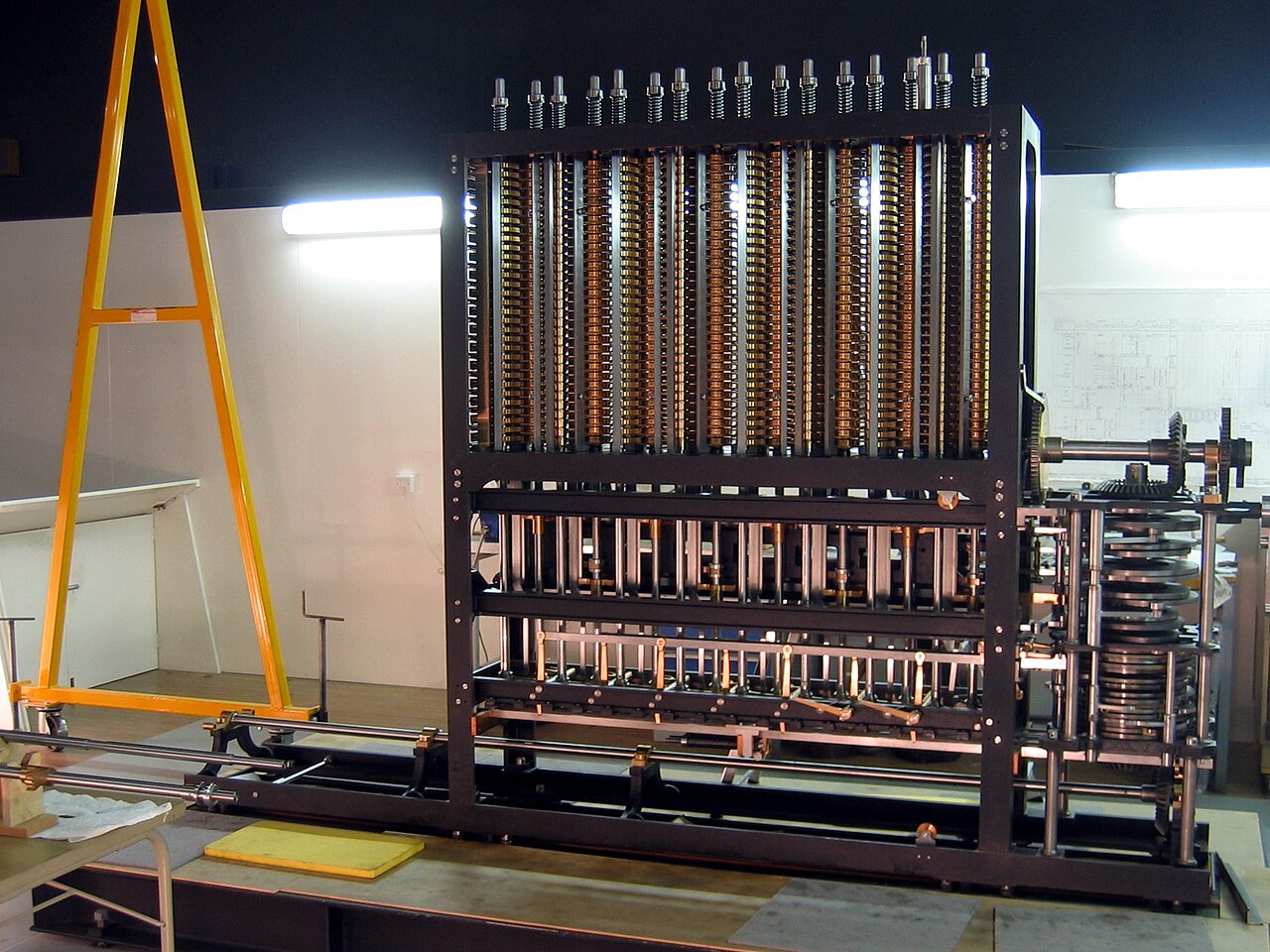
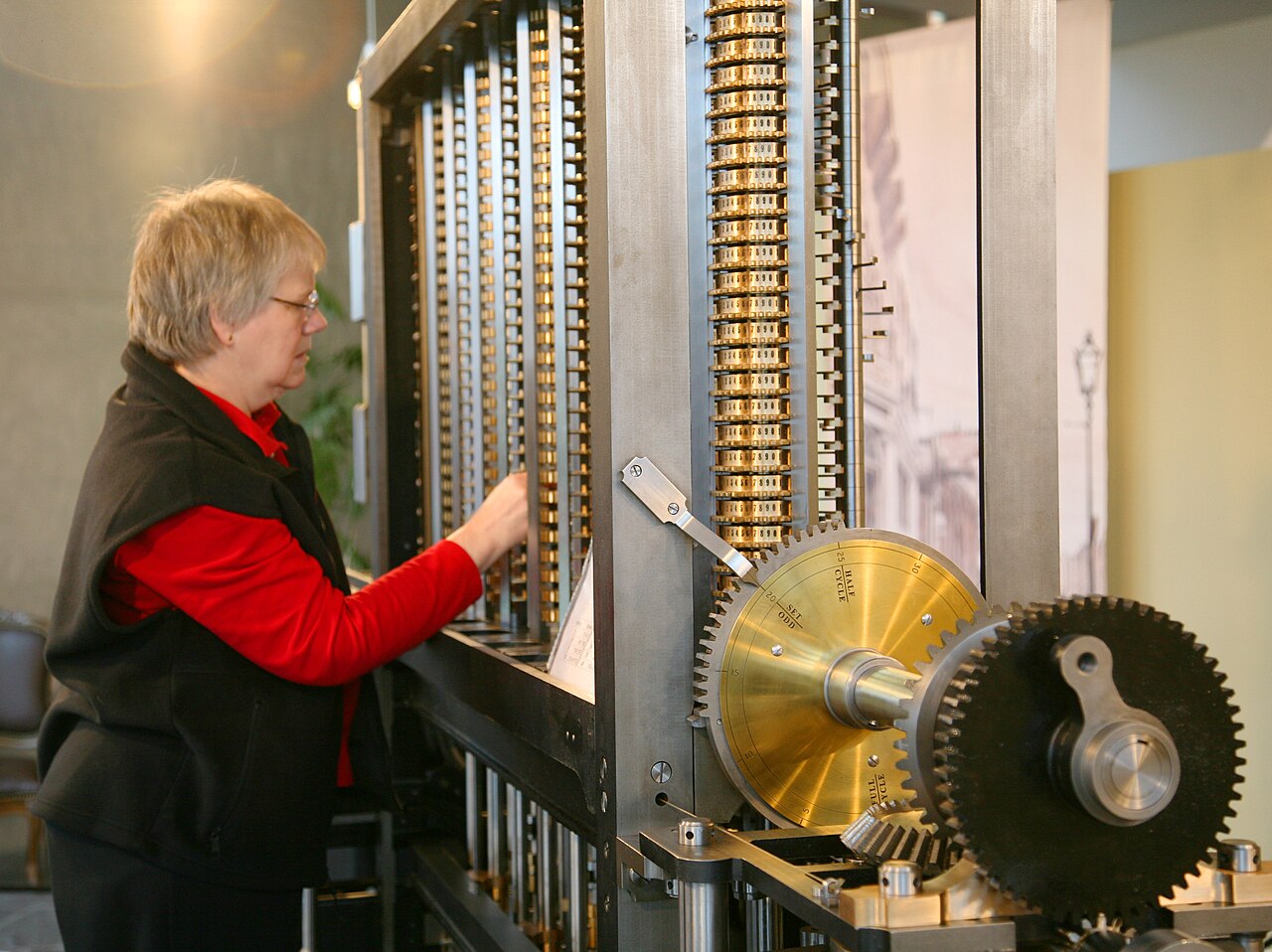
Difference Engine No. 2, a tall machine of brass and steel columns with a hand crankPhoto: Richard King from Sheffield, UK. CC BY 2.0. Source.

Today you are a history detective. Your case: two engines designed nearly two centuries ago by Charles Babbage, and the first person to see what machines like them might one day do, Ada Lovelace. Follow the clues, tick the boxes and write down your answers. An answer key for the teacher or guide follows the last clue.

Best for: Grades 5 to 9, or families
Time: 30 to 45 minutes
Where to use it: Beside a Difference Engine replica or a Jacquard loom display, or in a classroom with photographs and the sources listed below
You need: A pencil, this page and a sense of curiosity

Note for teachers: The clues name objects that many science museums display, but no gallery is guaranteed to hold every item. Skip any clue that does not fit your location, or use the photograph on this page and the reading list instead. The questions about Babbage's machine, Lovelace's notes and the people involved work from the facts in the answer key.

Part 1: The heavyweight champion

Clue 1: Look for a machine of metal columns taller than most adults. It has rows of toothed wheels and a hand crank on the side. Walk all the way around it.
Question: Count the tall columns of wheels you can see. How many are there? Write your guess first and then check.
Clue 2: This machine has no screen. It shows numbers on wheels. Each wheel carries the digits zero to nine, and a stack of wheels in a column holds one big number.
Riddle: I am more than 30 and less than 32. What am I?
Question: How many digits can one number in this machine have?
Clue 3: Find the crank. Imagine turning it. Babbage planned for a steam engine to drive his machines, but the modern replicas are turned by hand.
Question: Which three metals do the plaques say the parts are made from?

Part 2: What was it for?

Clue 4: In Babbage's day, people made tables of numbers, such as logarithms, for sailors, engineers and bankers. People did the calculating by hand, and people made mistakes. Babbage wanted a machine that would never make a copying error.
Question: Look for a printing part on the machine, or a drawing of one. What does it do with the answers, and why would that help to avoid mistakes?
Clue 5: The machine is heavy. Find the weight on a label or in your guide's notes.
Hint: Think of a large animal with a trunk.
Question: Which animal weighs about the same as the whole machine?

Part 3: The first programmer

Clue 6: Babbage drew plans for a second, grander machine called the Analytical Engine. It would follow instructions stored on punched cards. The idea came from the Jacquard loom, which wove patterns into cloth by reading holes in cards. If a loom display is nearby, look for the cards.
Question: How do holes in a card tell a machine what to do? Write one sentence in your own words.
Clue 7: Ada Lovelace was the daughter of the poet Lord Byron and a gifted mathematician. In 1843 she translated an article about the Analytical Engine and added notes that were longer than the article itself. Find a portrait or a printed page of her notes.
Question: In one of her notes she described a step-by-step method for the engine to calculate a series of numbers. What do we call a step-by-step method like that today?
Clue 8: Lovelace wrote that the engine might one day work with more than numbers. If it could represent other things, such as musical notes, it might compose music.
Question: Do computers do this today? Write down one example you have used.

Bonus round

  • Babbage never finished building his big machines. Why do you think that happened? Make two guesses, then check the answer key.
  • Draw the machine from memory in two minutes. Label three parts.
  • Invent a title for a poster that would make someone want to visit this display.

Did you know?

Babbage died in 1871 without seeing a finished Difference Engine. In the 1980s and 1990s, a team at the Science Museum in London built one from his drawings, finishing the calculating section in 1991. It worked. The result showed that the design was sound, and that the machine failed to appear in the 1800s mainly because of money, politics and the limits of Victorian metalworking.

Answer key for teachers and guides

  1. Columns: Difference Engine No. 2 has eight columns of figure wheels. Replicas differ in how they display them, so go by what the group can see.
  2. Digits: The design calculates with 31 digits.
  3. Metals: The Science Museum's engine uses bronze, cast iron and steel.
  4. Printer: The machine's output apparatus stamps the results into a soft material so that nobody has to copy the numbers by hand. Copying is a common source of errors.
  5. Weight: The Science Museum's engine weighs about five tons, close to the weight of an African elephant.
  6. Punched cards: A hole lets a rod or a pin pass, and a blank spot blocks it. The pattern of holes becomes a set of instructions.
  7. Algorithm: Lovelace's Note G sets out a method for computing Bernoulli numbers on the Analytical Engine. People often call it the first published computer program, though historians debate how much of it was her own design and how much was worked out with Babbage.
  8. Music and more: Lovelace suggested that the engine might compose music if the rules of harmony could be expressed as operations. Today's computers record, edit and generate music.
  9. Why unfinished: Babbage quarreled with his engineer, the government stopped funding the project, and the parts were extremely hard to make with the tools of the 1830s. He also kept redesigning the machine.

Sources for Your Research

  1. Swade, Doron. The Difference Engine: Charles Babbage and the Quest to Build the First Computer. Viking, 2001.
  2. Science Museum Group. "Babbage's Difference Engine No. 2" collection pages and the Science Museum's account of building the engine.
  3. Lovelace, Ada Augusta. Notes on L. F. Menabrea, "Sketch of the Analytical Engine Invented by Charles Babbage." Scientific Memoirs 3 (1843).
  4. Computer History Museum. Babbage Difference Engine No. 2 exhibit materials.
In the catalog

Babbage Difference Engines
Mechanical & Early Computing

Babbage Difference Engines

A mechanical calculator designed to print mathematical tables without human arithmetic errors, never completed in Babbage's lifetime and built from his plans in 1991.

1822 · Charles Babbage

Keep reading

Audio Script · Computer Graphics

Pixels and Polygons: The Evolution of Computer Graphics

A comprehensive 15-minute guided audio tour exploring the pivotal artifacts that transformed computer graphics from laboratory experiments into the foundation of modern visual culture.

9 min read
Audio Script · Hardware

The Black Cube: A Guided Tour of the Thinking Machines CM-1

A 14-minute audio script about the Connection Machine CM-1, a 1980s computer with 65,536 simple processors in a black cube of red lights.

8 min read
Deep Dive · Hardware

The AN/FSQ-7: The Giant Computer Behind Cold War Air Defense

How the SAGE air defense system and its AN/FSQ-7 computers introduced real-time computing, light guns, core memory and long-distance data links in the 1950s.

11 min read